Do I really need an architect?
If you are considering a renovation project or want to build a new home, you might ask yourself: "do I need an architect?" It's a fair question. And if you're asking it, you're probably also doing the math in your head — weighing the cost of hiring a professional against the hope that a good contractor and a set of purchased plans might be enough to get the job done.
I want to share with you some variables that will help you make an informed decision. This isn't a sales pitch or a list of reasons why architects are wonderful. These are real, practical answers to the question you're actually asking.
The short answer: it depends on your project. Grab a cup of coffee and let’s talk it though.
What you're actually paying for
You may have no idea what an architect does. They seem important and smart and use fancy words like ‘space’ and ‘fenestration’ and ‘egress’ as if everyone knows what they mean. Pop culture says they wear all black and have little round glasses and charge a lot of money. But what is their role in home design?

Think of an architect as both composer and conductor of a symphony. The composer writes a piece of music to convey certain feelings or ideas, using her knowledge of the various instruments, music theory and her own experiences to inform the composition. As the conductor, she has intimate knowledge of how the piece should be performed (because she wrote it). She guides the various members of the orchestra, each highly skilled at their instrument, to work together to create something beautiful.
An architect, then, takes all your ideas about the numbers and sizes of the rooms you want, the style you prefer, your values, and your budget parameters, and shapes it into a place where you will live. She uses materials, ceiling heights, the placement of windows, and many other variables to shape the way your home feels and functions. When you hire an architect, you're not just paying for "lines on a page." You're paying for an instruction set for a three-dimensional version of your dreams and ideas.
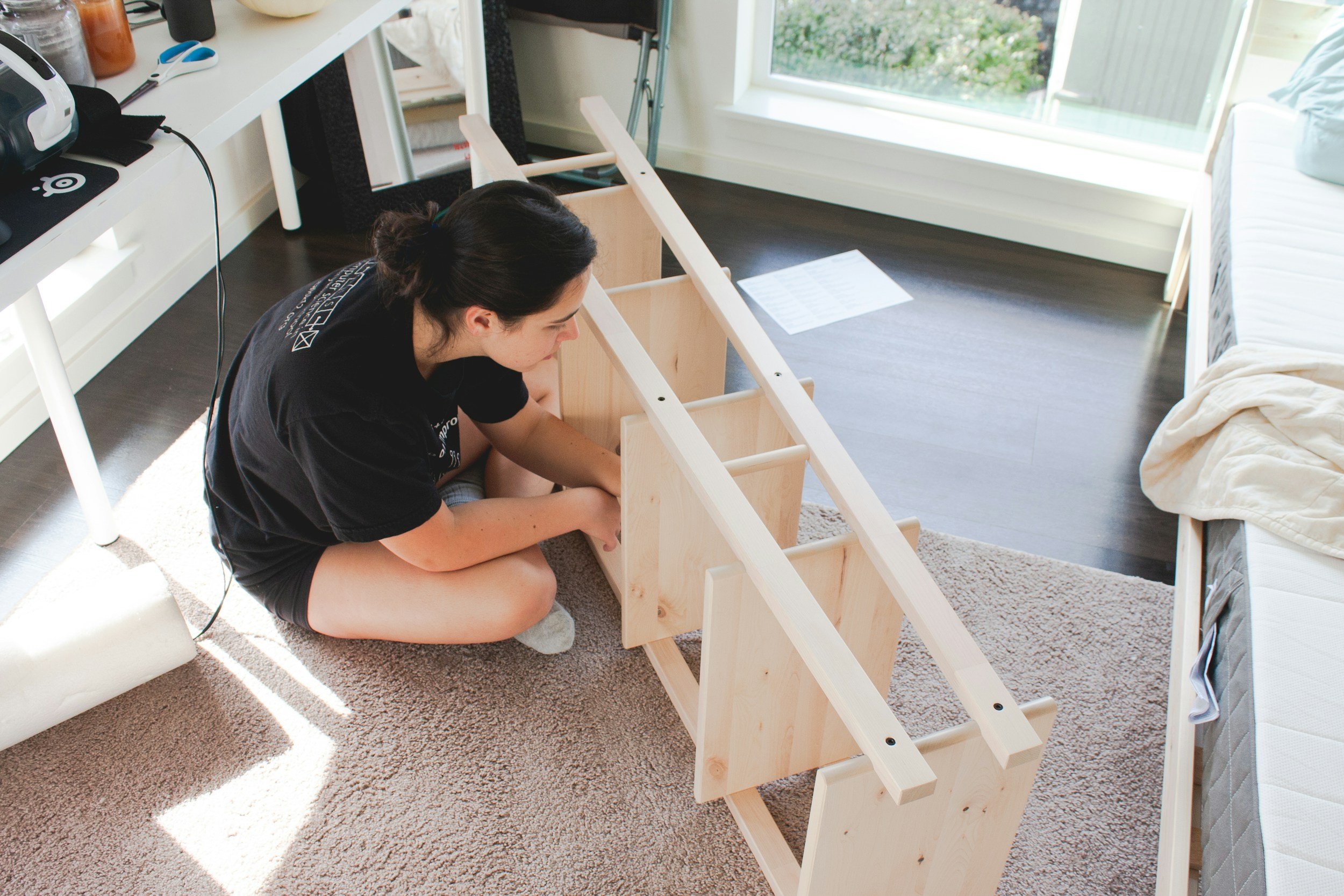
Think about the last time you assembled furniture with a confusing manual — the kind that skipped steps, mislabeled parts, or left you holding a screw with nowhere to put it. Now imagine that problem at the scale of an entire house, with a dozen different contractors all working from the same incomplete document. That's what happens when construction begins without thorough drawings and specifications. The gaps don't disappear, they just get filled in by whoever is standing on the job site that day, at whatever cost that decision happens to carry.
The numbers bear this out. According to industry research, 45% of construction budget overruns are caused by design errors or omissions — incomplete plans that force expensive decisions mid-build. Not because of incompetence by the builders, but because they did not have enough information to accurately plan and predict for the construction process. A separate study of more than 16,000 construction projects found that over half went over budget, with an average cost overrun of 65% (Source: Scroggs Construction, Asheville). In residential renovation specifically, cost overruns of 15–20% above the original estimate are common.
Detailed drawings and specifications — the kind a licensed architect produces — directly address the three leading causes of those overruns: scope creep from incomplete plans, unexpected site conditions caught too late, and the cascading cost of changes made after construction begins.
A good architect doesn't add to the cost of your project. She reduces it.
Who is actually designing your home?
This can be confusing for folks new to the design and construction industries, and the answer isn't always obvious. In North Carolina, the title "architect" is protected by law. To use it, a person must earn a professional degree in architecture, complete a multi-year apprenticeship, and pass seven separate licensing examinations. Licensed architects are regulated by the NC Board of Architecture, complete yearly continuing education requirements, are required to carry professional liability insurance, and have a fiduciary responsibility to their clients — not to the contractor.
That last point matters. In North Carolina, a licensed architect cannot be employed by or work for a general contractor or developer, because doing so would create a professional conflict of interest. Your architect's contract is with you. Their obligation is to you.
However, permits for residential projects do not typically require an architect’s stamp. There are other professionals who can produce residential construction drawings: draftspeople, designers, and design-build firms among them. Some are talented and experienced, and for the right project they may be a reasonable fit. But it's worth understanding the differences.
A draftsperson translates your ideas into drawings. They may do this skillfully, but their training is typically focused on drawing your ideas rather than on design, structural systems, code compliance, or the full complexity of the building process. If something goes wrong — a plan that can't be permitted, a structural issue discovered mid-build, a design that doesn't perform the way it was intended — they may not have the knowledge or skill set to solve those problems.
A design-build firm handles both design and construction under one contract. There are good design-build companies, and the integrated approach can have real advantages as there is a seamless and collaborative approach to the design and construction of your home. The question worth asking is: who is the designer, and what is their training and experience? Because in North Carolina a licensed architect cannot work as an employee of a builder, the "designer" in a design-build arrangement is, by definition, not a licensed architect. They may be a skilled and experienced professional who is fully capable of designing a good home. But it is worth asking and understanding their qualifications.
None of this is meant to cast doubt on professionals who work hard and do good work. It's meant to help you ask informed questions before you sign a contract.
Building in the mountains is different
Western North Carolina and the upstate of South Carolina are beautiful places to live. Yet some of the very features that make our region wonderful make it a more complex place to build.
In the mountains and foothills, terrain is rarely forgiving. Steep slopes, unstable soils, and dramatic grade changes affect everything: where a house can sit, how it needs to be engineered, what the driveway will cost, and whether your septic system can properly do its thing. Buncombe County requires a geotechnical analysis for construction on slopes above 2,500 feet, and restricts building on soils with a slope greater than 35% (Source: Buncombe County Zoning Ordinance). Henderson County limits residential density on tracts where slopes of 60% or greater make up a significant portion of the land (Source: Henderson County Zoning District Regulations). A site that looks buildable on paper can tell a very different story once someone walks it carefully. Additionally the footprint of your home and how it sits on your property can significantly affect construction costs.
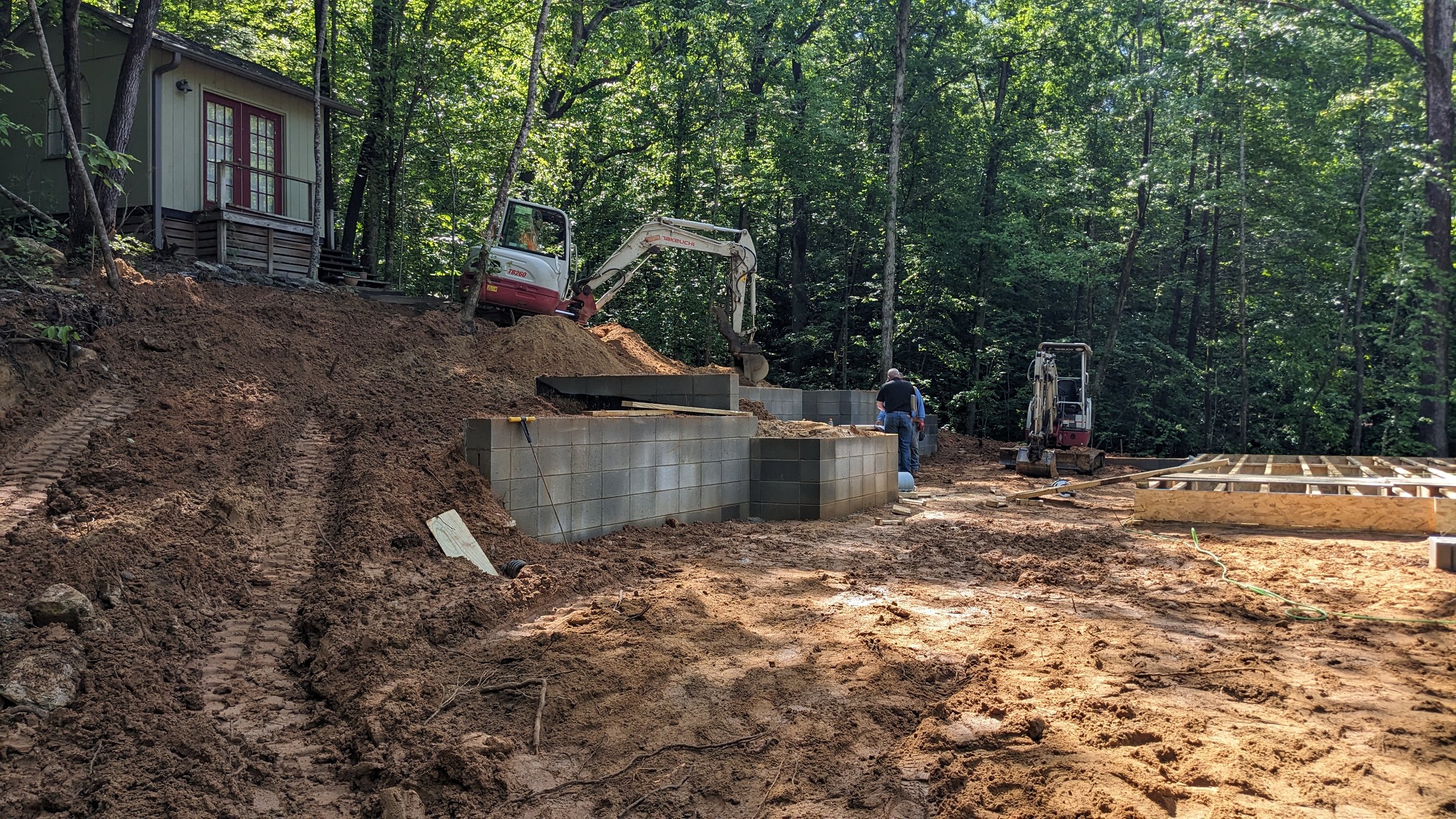
Waterways add another layer. Our region is full of creeks, streams, rivers and wetlands — many of which carry regulatory setback requirements that aren't immediately obvious. Navigating this landscape without someone who knows the local regulatory environment is a slow and expensive way to learn.
Zoning and construction regulations can vary significantly from county to county and even within counties. What's allowed in unincorporated Henderson County may be restricted in the City of Hendersonville, in a mountain HOA, or in a historic district. These aren't obstacles that defeat good projects. They're variables that need to be understood before you design, not discovered halfway through construction.
Older homes have their own set of surprises. The mountains are full of houses with character and history, and I love working on them. But a 1940s farmhouse or a 1970s cabin will almost certainly have quirks behind the walls — outdated electrical, undersized structure, materials that haven't aged the way anyone hoped. Uncovering those challenges during the design phase, when they can be planned for and budgeted, is a very different experience from being surprised by them after demolition has begun.
I worked with a client who had purchased a set of house plans online and found a mountain lot they loved but the lot had a significant slope, a creek running through one corner, and setback requirements that compressed the buildable area considerably. What looked like a straightforward site turned out to require modifications to the house plan, careful positioning to respect the setbacks and make the most of the views, and close coordination with the builder throughout design and construction. The result was a home that fit the land beautifully and became the gathering place they'd always imagined. But none of that was possible without someone who could see the site as a design problem to be solved, not just a location to place a building.
What does it actually cost, and is it worth it?
Let's talk numbers, because this is usually where the conversation gets uncomfortable. In western North Carolina, new home construction currently runs roughly $300–$450 per square foot, depending on complexity, site, and finishes. In the upstate of South Carolina, the range is generally $200–$400 per square foot. On a 2,000 square foot home in the Asheville area, you're looking at a construction cost somewhere between $600,000 and $900,000.
A general contractor typically earns 15–25% of that construction cost. That fee — often $90,000 to $225,000 on a project of that size — is built into the construction loan. It doesn't feel like a line item because it's absorbed into the total.
Architect fees for residential work in this market typically run 5–15% of construction cost, depending on the scope of services. On that same project, that's roughly $30,000 to $135,000. But unlike the GC's fee, architect fees are paid directly and up front — which makes them feel more significant than they are in proportion to the total investment.
These fees seem like a lot, because they are. But remember: you are hiring a licensed professional to design and document your most valuable asset. The fee, relative to the total lifetime value of a well-designed home, is not large. The cost of a poorly designed home — in change orders, in living with a layout that doesn't work, in renovations you'll eventually have to make — tends to be much larger.
When you might not need a full-service architect
Not every project requires full architectural services, and I'd rather help you make a good decision than oversell you on something you don't need.
You may not need an architect if:
Your project is cosmetic — new flooring, paint, cabinets, or finishes that don't involve moving walls or changing structure.
You're doing a single-room update that doesn't affect the building's systems or structure.
You've found a set of house plans online that fits your site and needs without modification.
You found a good design-build company with an experienced designer and a builder you trust.
That said, even for smaller projects, an hourly Design Consultation can give you professional perspective on decisions you're not sure about without the commitment of a full project.
You may want to involve an architect if:
You're tackling a multi-room renovation or an addition.
You're placing a purchased set of plans on a challenging site — sloped land, waterway setbacks, or a tight lot.
You want to create a master plan to guide phased renovations over time.
If this is you, a Design Consultation, Plan Modification services, or a Floor Plan Analysis can provide you with the help you need without the investment of full architectural fees.
You almost certainly need an architect if:
Your renovation involves structural changes — moving walls, altering the roof line, or modifying load-bearing elements.
You're building a custom home from scratch.
You want to modify a purchased house plan. What looks like a simple change on paper can have significant structural and cost implications when it reaches the job site.
You're navigating complex HOA requirements, historic district rules, or overlapping county and municipal jurisdictions.
You're working on an older home where the history of the building is part of what you're trying to preserve.
This is when your architect’s expertise can save you time, money and stress by solving the problems you are aware of and anticipating what is around the corner.
The part no one tells you
Every decision in a building project has to be made by someone. If you don't have an architect, either your contractor will ask you to make those decisions — and there are hundreds of them — or someone on the job site will make them for you, without asking.
I've been practicing since 2007, licensed since 2013, and I've spent nearly two decades learning how buildings go together, how sites work, how codes are applied, and how families actually live in their homes. What I bring to your project isn't a drawing. It's a trained eye, a calm presence in a complicated process, and a genuine investment in the home you end up with.
Whether it's a renovation that's been on your list for years or a custom home you've been imagining your whole life, designing your home is an adventure worth approaching thoughtfully. You don't have to navigate it alone.
If you're not sure where to start, I'd love to talk. A consultation is a low-risk way to get clarity before you commit to anything. And sometimes, that one conversation is all it takes to see the path forward.
May your home tell your family's story for years to come.
— Heather
Sources
Contractor Accelerator: Construction Budgeting: 5 Proven Strategies for Residential Contractors to Prevent Budget Overruns (contractoraccelerator.com)
Scroggs Construction Services: Home Remodeling and New Construction Budget Protection in Asheville (scroggsconstruction.com)
Buncombe County Zoning Ordinance: Steep Slope/High Elevation Overlay District (buncombenc.gov)
Henderson County Zoning District Regulations: Slope density restrictions (hendersoncountync.gov)
NC Board of Architecture: Architect licensure requirements (ncbarch.org)
