How much house do you actually need?
"That house was, as long ago reported, a perfect house, whether you like food or sleep, or story-telling or singing, or just sitting and thinking best, or a pleasant mixture of them all. Merely to be there was a cure for weariness, fear and sadness." — J.R.R. Tolkien, The Fellowship of the Ring
Tolkien wasn’t describing square footage, and he wasn’t describing a style. He was describing how a place felt, how it made the people inside it feel, and the lifestyle they were able to live because of it. That distinction matters more than most of us realize when we sit down to design or renovate a home.
Many people spend the early part of the process focused on what the house looks like, how big it is, and how it compares to what they see in magazines or on Instagram. They collect images, talk to contractors, and begin imagining the finished product before they’ve asked the most important questions: How do I want to feel in this house? How do I want the people I love to feel when they walk through the door?
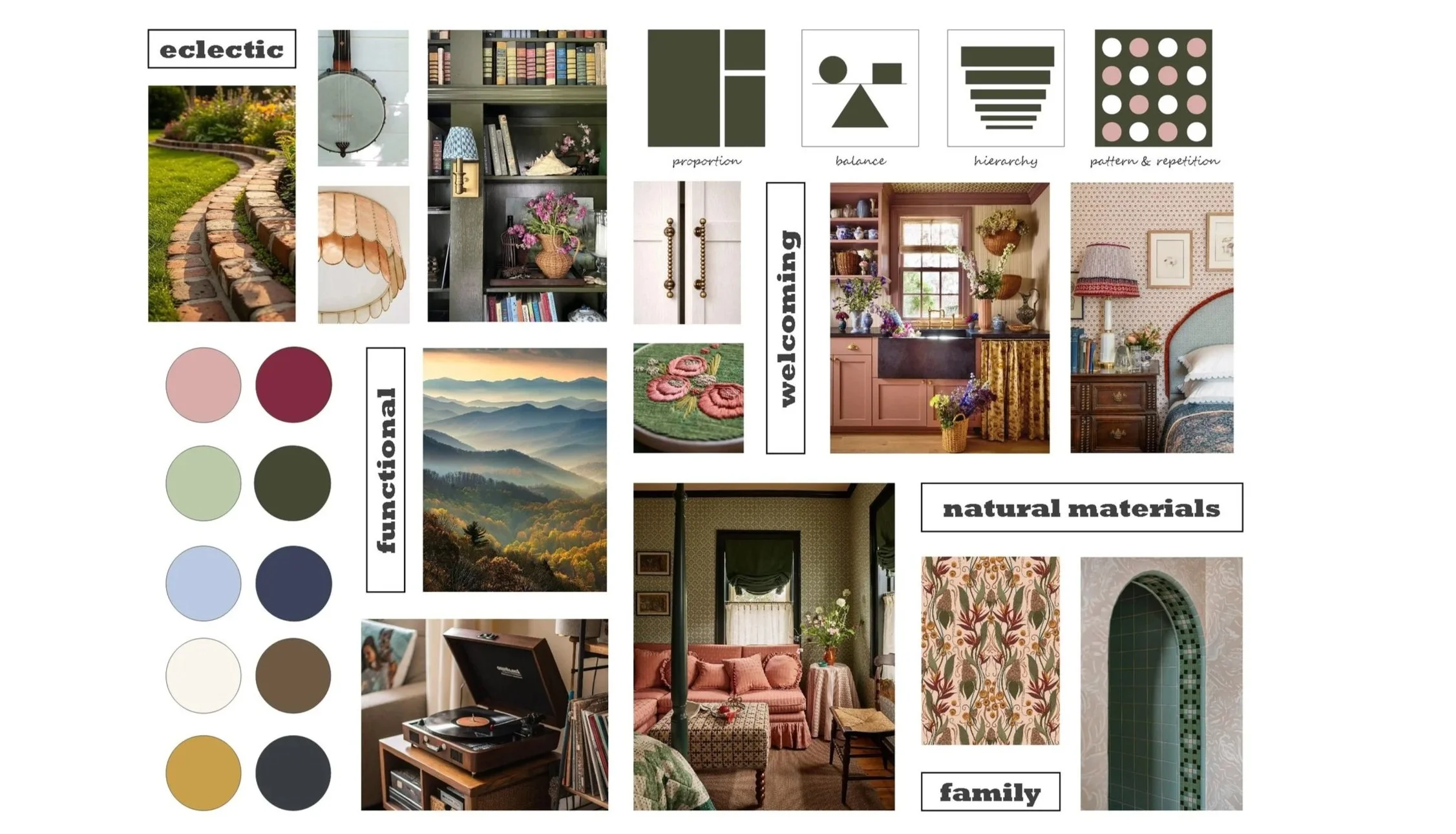
Before I sketch a single line for a client, whether it’s a renovation or a new custom home, I ask them to set aside style preferences and square footage goals and instead tell me about their life. Walk me through a typical Tuesday. Describe your Saturday morning. What parts of your current home are you fighting every day, and if that friction disappeared, what would it free up for you?
I ask clients to picture two or three real scenes in their new home, not staged photographs but actual moments: the morning rush before school, a Sunday dinner with extended family, the quiet hour after everyone goes to bed. Which spaces need to work hard, and which ones deserve to feel special? What do you love to do at home, and how could the design support that more fully?
This line of thinking matters because at its core a home is a vessel for moments and memories. Without the people and life inside it, it’s an empty box.

A few years ago I came across a word in a podcast about home design, and it has stayed with me ever since. The word is “enoughness,” and it was coined by Jane Hilliard, a building designer in Tasmania, Australia. She built her entire practice around a deceptively simple idea: knowing what you actually need is the foundation of a well-designed home. Not what the design shows tells you to want, not what your neighbor just built, but what your family genuinely needs to live well.
Enoughness isn’t minimalism, and it isn’t a philosophy of living small for its own sake. It’s about making intentional choices and refusing to spend money, time, and energy on spaces that don’t serve your real life.
American homes are some of the largest in the world, surpassed only by Australia. Yet for many homeowners much of the space in their home goes unused. That rarely used guest bedroom. The formal dining room that hosts one holiday dinner a year. The home office that quietly became a storage space.
The average American home is 714 square feet per person Yet my grandparents raised 3 kids in an 950 square foot house with one bathroom (my dad still jokes that his bedroom was literally in the hallway!). Is this ideal? Of course not, but it is a reminder we don’t need quite as much space as we think. A small decrease in square footage can make a big difference.
Consider a family of four using the American average: they’d be living in roughly 2,856 square feet. Reduce that to 600 square feet per person and the total drops to 2,400 square feet. That difference of 456 square feet can translate to hundreds of thousands of dollars saved in construction costs, meaningfully lower energy and maintenance expenses over time, and quite practically, 400 fewer square feet to clean every weekend!
If you’re planning a new build or a whole-house renovation, these questions are worth sitting with before you finalize your program. Could a murphy bed offer guests a comfortable place to stay without dedicating an entire bedroom to a purpose it serves twice a year? Could a well-designed shared living space bring your family together while still giving everyone the space they need for privacy? Could reducing the number of bathrooms, which are the second most expensive square foot in a house after kitchens, keep you on budget and simplify maintenance for decades to come? None of this means cutting corners. It means making choices on purpose.
I also firmly believe that you should design for the life you are actually living rather than the life you imagine you might someday live. A better kitchen will not transform you into someone who loves cooking. But a well-designed, functional kitchen can make the cooking and cleaning you already do noticeably easier, and that is worth every dollar you invest in it. Put your money and attention into the parts of your home that are genuinely true to how your family lives, and keep everything else simple and efficient. Don’t chase trends. Trends belong to someone else’s story. Your home should tell yours.
Here is where “enoughness” gets complicated, and I want to be honest about that tension. Planning a home only for today isn’t the right answer either, because life changes in ways we can’t fully predict. Families grow. Kids eventually leave. Parents age. Bodies change over time. A well-designed home needs to be flexible enough to accommodate at least some of what’s coming.
The good news is that you don’t have to build for every possible future version of your life. You just have to build with adaptability in mind.
I worked with a couple who were retiring to the mountains and wanted to build on land where an old cabin had stood for years. The cabin had worn out, but their connection to the land hadn’t. We designed a new home with a footprint similar to what had been there before, updated with modern amenities, an accessible mother-in-law apartment for my client’s mother, and a series of details that would allow them to age comfortably in place: wider doorways, blocking in the walls for future grab bars, a zero-entry shower. The house didn’t feel clinical or institutional. It felt like them, and it felt like it had always belonged on that hillside.
For a new construction project, thoughtful planning might mean making sure your hallways and doorways are wide enough to maneuver a walker or wheelchair, even if that’s the last thing on your mind right now. It might mean roughing in the plumbing in the basement for a future bedroom suites so that you don’t have to tear up the concrete slab later. It means thinking through the roof line and structure of your future addition so that, when the time comes, the work is simple and straightforward.
For a renovation, it might mean developing a master plan now, even if you’re only tackling the kitchen this year. This ensures that every phase builds intelligently on the last one rather than creating new problems to solve later. Flexible and adaptable doesn’t mean oversized or redundant. You can plan thoughtfully for your future without building it all today.
So before you open a design app or pull up Pinterest, sit down with the people who will live in this house and answer a few things:
What does home mean to you? Not as a concept — for your family specifically.
What are your values? Not what you think you should value, but what actually shapes how you use your time and energy.
What is your real capacity for this project financially, mentally, and physically?
Then we can start designing the story of your home.
Interested in thinking through what "enough" looks like for your project? A Discovery Call is a good place to start — click on the link below to schedule a free 30-minute conversation. This will give us a chance to get to know each other and determine if I can help you plan and design your home.
